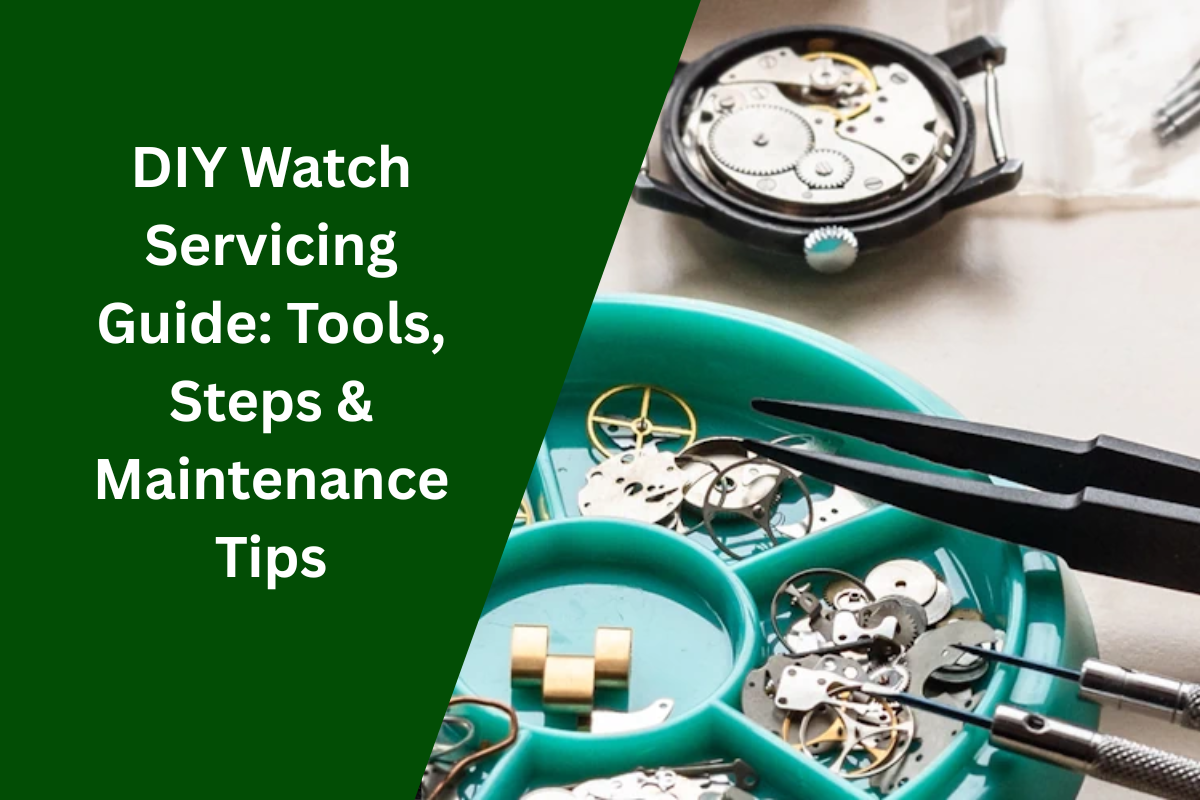
You might have wondered what actually happens when a watch gets serviced. Is it something only trained watchmakers can handle, or can an enthusiast attempt parts of it at home?
Interest in self-watch servicing has grown quickly among collectors who enjoy learning how their watches work. Online forums, watch repair channels, and accessible tools have encouraged people to explore basic maintenance on their own.
Before you reach for a case opener, it helps to understand what self-watch servicing really involves, which tasks beginners usually attempt, and where the risks start to rise when valuable watches enter the conversation.
What Self Watch Servicing Actually Means?
Self-watch servicing refers to maintaining or repairing a watch without sending it to a professional service centre. You carry out the work yourself, whether the task is basic upkeep or a deeper mechanical repair.
It covers several levels of work, and enthusiasts usually progress gradually as they learn more about how movements function.
Typical levels of self-watch servicing include:
- Basic maintenance, such as battery replacement, strap changes, and external cleaning
- Intermediate repair, such as regulating a movement or replacing small components
- Complete servicing, which involves working directly on the movement itself
A full watch service follows a precise sequence that mirrors the workflow used by professional watchmakers. The process normally includes
- Full movement disassembly
- Cleaning of individual components
- Lubrication of friction points
- Replacement of worn parts
- Reassembly of the movement
- Regulation and timing adjustments
The complexity of this work is easy to underestimate. Modern mechanical watches often contain 200-300 miniature components working together within microscopic tolerances. Even a small mistake during servicing can affect accuracy or damage delicate parts.
Why Watches Need Regular Servicing?
Your watch might still tick every day, though small signs often appear long before a problem becomes obvious. Time begins drifting slightly. The power reserve shortens. The movement may even sound different when you listen closely. None of this happens randomly.
1. Oil Degradation
A mechanical movement depends on extremely small amounts of specialised oil placed at precise contact points. These lubricants reduce friction where metal components interact.
With time, the oil slowly dries, spreads away from its original position, or collects microscopic dust particles. Once lubrication weakens, surfaces that once moved smoothly begin rubbing directly against each other. Friction increases, and the movement gradually loses efficiency, which affects timekeeping.
2. Mechanical Wear
Every mechanical watch runs through constant repetition. Gear trains rotate continuously while the balance wheel controls the pace of the movement.
In a modern watch, the balance wheel typically oscillates about 28,800 times each hour. That relentless motion slowly produces microscopic wear on pivots, jewels, and gear teeth. The changes remain invisible for years, though they eventually influence accuracy.
3. Environmental Factors
Daily life also exposes watches to external conditions that affect the movement over time. Electronics around you can introduce magnetism, seals can weaken and allow moisture inside the case, and accidental impacts can disturb delicate internal parts. Dust contamination can also build gradually within the movement.
For these reasons, manufacturers commonly recommend servicing mechanical watches every three to five years. Regular servicing allows a watchmaker to clean the movement, restore lubrication, and correct small issues before they develop into serious mechanical damage.
Types of Watch Servicing You Can Do Yourself
Opening a watch for the first time can feel intimidating, which is why you should begin with small maintenance tasks before touching the movement itself. These early jobs build familiarity with cases, tools, and components while keeping the risk level manageable.
1. Battery Replacement for Quartz Watches
If you own a quartz watch, battery replacement is the maintenance task you will encounter most often. A typical battery lasts between two and five years, after which the watch will stop or begin losing power.
Replacing it involves opening the caseback, removing the old battery, installing a fresh one, and sealing the case again. Plastic tweezers are preferred during this process since metal tools can create electrical contact with the battery.
Before the case closes, it is good practice to apply a small amount of silicone grease to the gasket. This keeps the seal flexible and helps preserve the watch’s resistance to moisture.
2. Bracelet and Strap Adjustments
Comfort on the wrist often requires small adjustments. Steel bracelets can be resized by removing or adding links until the fit feels balanced.
Changing a strap follows a different process. A spring bar tool releases the small bars that hold the strap between the lugs, allowing you to swap materials or styles easily. While performing these adjustments, many enthusiasts also clean bracelets and clasps to remove the dirt that collects between links during everyday wear.
3. Demagnetizing a Watch
Magnetism can affect a watch without leaving visible signs. Phones, laptops, speakers, and other electronics produce magnetic fields that may influence the movement.
A magnetized watch often begins running unusually fast. A demagnetizer solves this problem quickly by neutralizing the magnetic influence and allowing the movement to return to normal timekeeping.
4. Basic Regulation
Once collectors gain more confidence, some experiment with small adjustments to the movement’s regulator. This component influences how quickly or slowly the watch runs.
Because even a tiny adjustment can change timekeeping noticeably, regulation should always be checked with a timegrapher. The device measures rate and stability so you can see whether the change improved accuracy.
Tools Required for Self Watch Servicing
Watch servicing relies on precision tools built for extremely small mechanical components. Using proper equipment helps you work safely and prevents damage to delicate parts inside the movement.
Tool
Purpose
Caseback opener
remove watch caseback
Watchmaker screwdrivers
remove micro screws
Tweezers
handle small components
Movement holder
stabilize the movement
Loupe
magnification for detailed work
Hand remover
remove watch hands
Hand press
reinstall hands
Dust blower
remove debris from dial and movement
As hobbyists gain experience, they often add tools to diagnose or maintain watches more effectively.
Professional watchmakers rely on a much larger range of equipment. Mainspring winders, jeweling tools, staking sets, and pressure testing machines support advanced servicing tasks. A fully equipped watchmaking bench can easily include thousands of pounds worth of specialized tools.
Steps to Service Your Watch Yourself
Before you start opening screws and lifting gears, pause for a moment.
Servicing a watch yourself is less about rushing into the movement and more about working carefully, step by step. The goal at home is not a full overhaul. You focus on inspection, light maintenance, and small corrections that keep the watch running smoothly.
Step 1: Prepare Your Workspace
Clear a small workspace where dust and clutter will not interfere with the watch. Good lighting helps you see small components clearly.
Lay out your tools, place a tray nearby for screws, and wear finger cots or gloves so oils from your skin do not transfer to the movement. Taking a quick photo before removing anything can save you a lot of confusion later.
Step 2: Open the Watch Case
Use the correct caseback opener and remove the case carefully. Once the caseback lifts away, you will see the movement sitting inside the case.
Resist the temptation to touch everything immediately. Certain parts, such as the balance spring, are extremely delicate. One accidental contact can bend them.
Step 3: Inspect the Movement
Bring a loupe close to the movement and take a careful look. You are checking for dust, loose screws, or dried oil around moving parts.
This step tells you whether the watch only needs light cleaning or something more complex that should be left to a watchmaker.
Step 4: Clean Visible Areas
Use a dust blower to remove particles that may have settled on the movement or dial. Avoid using cloth or brushes directly on delicate components.
You can also clean the inside of the case and the caseback while the watch is open.
Step 5: Apply Minimal Lubrication
If you have the proper watch oil and know where to lubricate, apply a very small amount to accessible friction points.
Different movement areas require specific lubricants:
Watch Component
Lubricant Type
Escapement
heavier oil
Balance jewels
fine oil
Gear pivots
medium oil
Barrel walls
grease
Use restraint here. Excess oil spreads quickly inside a movement and creates more problems than it solves.
Step 6: Close the Watch
Place the movement back into position and secure the stem. Before sealing the caseback, inspect the gasket.
A light coat of silicone grease helps keep the seal flexible and improves resistance against moisture.
Step 7: Check How the Watch Runs
Once the watch is closed, observe how it performs over the next day. Notice whether it gains or loses time.
If you have access to a timegrapher, you can measure beat error, amplitude, and daily rate to see how well the watch is running. Small regulation adjustments can improve accuracy and bring the watch closer to official Swiss chronometer testing standards, though larger issues usually indicate the watch needs a full professional service.
Watch Movements Beginners Use for DIY Servicing
Thinking about practicing watch servicing on your favourite Rolex or Omega? That is usually the moment experienced collectors step in and say one thing. Do not start there.
When you are learning how a mechanical movement comes apart and goes back together, mistakes are part of the process. Screws slip. Springs jump. Tiny parts disappear across the desk. Practicing on inexpensive watches gives you the freedom to learn without turning a luxury watch into a costly repair project.
Certain movements appear again and again on watchmaking benches for one simple reason. They are forgiving, widely available, and much easier to work with while you are still building confidence.
Movement
Reason
Seiko NH35
tough automatic movement known for reliability and simple construction
Miyota 8215
affordable automatic movement that is widely used in entry-level watches
ETA 2824 clone
familiar Swiss-style movement layout found in many modern watches
ST36
large pocket watch style movement with bigger components that are easier to handle
Most of these movements cost somewhere between €20-€100. That price range makes them ideal practice pieces.
Skills Required for Self-Watch Servicing
Working on a watch quickly teaches you one thing. Precision matters more than speed. The mechanism inside your watch is built from tiny interacting parts, and handling them demands both technical understanding and careful control.
Several abilities make the learning process far smoother.
- Micro mechanical handling - You must be comfortable manipulating extremely small parts without bending springs, stripping screws, or sending pieces across the desk.
- Understanding how the gear train works - Knowing how energy travels from the mainspring through the wheels helps you recognize when something is out of alignment or creating resistance.
- Lubrication awareness - Watch oils are applied in microscopic amounts. Too little increases friction. Too much spreads across nearby parts and interferes with the movement.
- Steady hands and fine motor control - Small adjustments often determine whether a watch runs smoothly or stops entirely.
- Diagnosing mechanical faults - A watch that runs fast, loses power quickly, or stops intermittently usually reveals clues about what is happening internally. Learning to read those signs takes time.
These abilities rarely appear overnight. Even experienced collectors spend months practicing on inexpensive mechanisms before feeling comfortable tackling more complicated work.
Risks of Self Watch Servicing
One misplaced touch can ruin a watch movement. The most delicate part inside a mechanical watch is thinner than a human hair. Bend it slightly, and the watch may start gaining minutes every day or stop running altogether. This is why self-watch servicing attracts curiosity but also demands caution, especially when valuable timepieces are involved.
When people begin working on their own watches, a few problems appear more often than others.
1. Balance Spring Damage
The balance spring controls the rhythm of the movement. Its coils expand and contract thousands of times every hour to regulate timekeeping.
Because the spring is extremely thin, even a slight deformation can disturb the spacing between its coils. Once that happens, the watch may run unpredictably and correcting the shape requires specialized skill and equipment.
2. Lost Components
Inside a movement, some screws measure less than one millimetre in size. A small slip of the tweezers can send one rolling across the desk or disappearing entirely.
Even a single missing screw or spring can prevent the mechanism from functioning properly. Locating replacements for specific movements is not always straightforward.
3. Improper Lubrication
Lubrication inside a watch must be applied in extremely controlled quantities. Too much oil spreads across nearby parts and interferes with the movement. Too little oil on metal surfaces are rubbing directly against each other.
Both situations increase friction and gradually affect accuracy.
4. Dust Contamination
Watchmakers normally service movements in controlled environments to reduce contamination. At home, tiny dust particles can easily settle on exposed parts.
When dust mixes with lubricant, it behaves like abrasive material between gears and pivots, accelerating wear inside the movement.
Because of these risks, collectors often rely on professional servicing when dealing with valuable watches. Specialists at Time Is Money Watches work with precision tools, genuine replacement parts, and trained technicians to service luxury timepieces safely while protecting their long term value.
Protect the Performance and Value of Your Watch
Understanding how a watch works can make servicing feel tempting. Exploring the mechanics, learning how gears interact, and handling small adjustments often gives you a deeper appreciation for the craftsmanship inside your timepiece. Many collectors begin this journey with simple maintenance or by practicing on inexpensive movements before attempting anything more complex.
Luxury watches, however, operate with extremely fine tolerances. A small mistake during servicing can affect accuracy, damage delicate parts, or reduce the long term value of the watch. When a high-end timepiece needs a full service, restoration, or detailed repair, precision and experience become critical.
This is where professional expertise matters.
Time Is Money Watches provides specialist servicing, polishing, restoration, and repairs for prestigious brands including Rolex, Audemars Piguet, Patek Philippe, Omega, Richard Mille, Tag Heuer, and Cartier. Each watch is handled by experienced technicians using precision tools and genuine replacement parts to restore performance and protect long term value.
If your watch deserves the level of care it was originally crafted with, speak with the team or visit the showroom to discuss your servicing needs.
FAQs
Can you service a watch yourself?
For a few basic things, yes. Jobs like changing a battery, swapping a strap, or giving the case a careful clean are fairly manageable if you have the right tools. A full mechanical service is another level entirely. That means taking the movement apart, cleaning every piece, applying fresh oils, and rebuilding everything exactly as it was. Since there are so many tiny parts involved, most people who want to learn start by practicing on inexpensive movements first.
What tools do you need to service a watch?
You do need proper watch tools. A small set of watchmaker screwdrivers, tweezers, a loupe, and a caseback opener is usually the starting point. A movement holder and dust blower also make life easier when you’re working with small parts. Once you get deeper into watch repair, you’ll start seeing equipment like timegraphers for checking accuracy and ultrasonic cleaners used for cleaning components.
How often should a watch be serviced?
Service intervals depend on the movement and how often the watch is worn. Many manufacturers suggest checking mechanical watches every few years to keep them running properly. Regular servicing helps identify worn parts early and keeps the movement operating smoothly.
Is self-watch servicing safe for luxury watches?
It can be risky. Luxury watches contain very delicate components, and even a small mistake can affect how the watch runs. Parts like the balance spring are extremely fragile. Many collectors prefer to have high-value watches serviced professionally to avoid accidental damage and to keep the watch performing as it should.
What is the easiest watch servicing task for beginners?
Replacing the battery in a quartz watch is usually the simplest place to begin. It does not involve dismantling the movement, and it gives you a chance to get comfortable opening the case and working carefully around small parts.