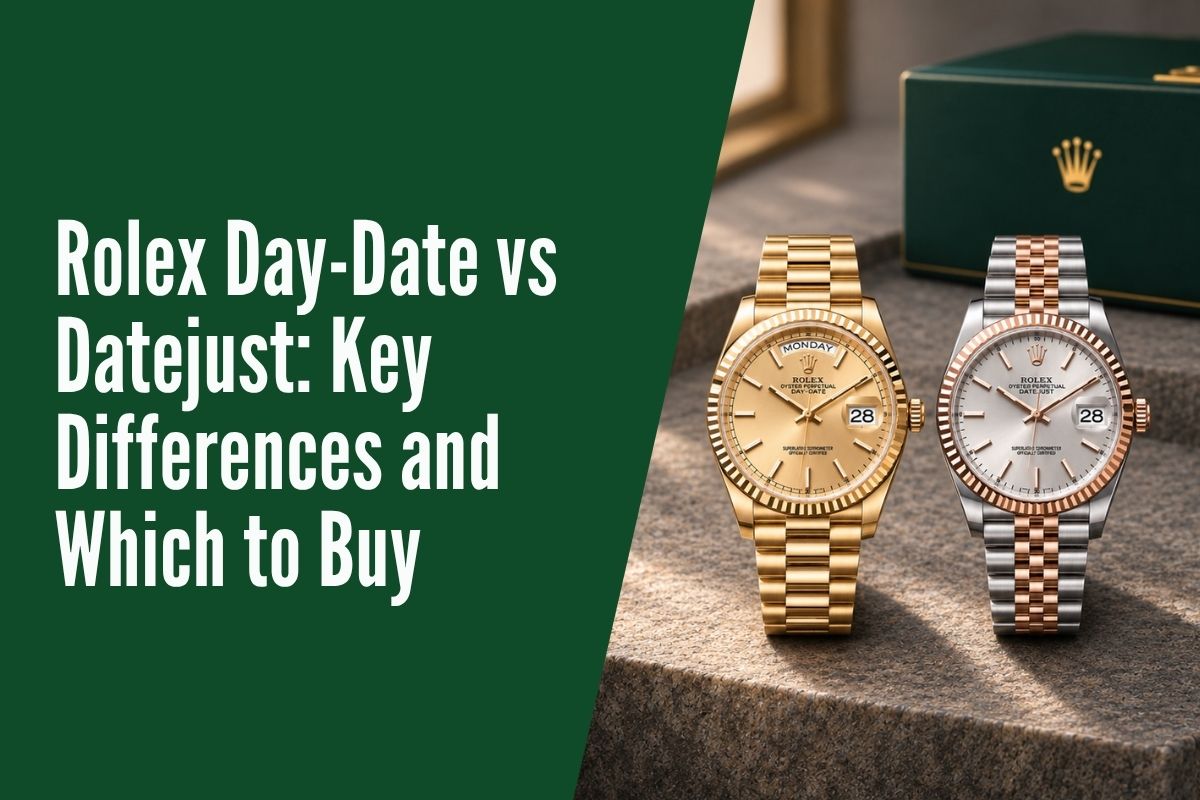
The Rolex Day-Date and Datejust have remained two of the brand's most celebrated watches for decades. Both are known for their elegant designs and calendar functions, but the differences in materials, features, and pricing make choosing between them an interesting decision.
The Datejust displays the date, while the Day-Date also shows the full weekday. Yet a modern Day-Date can cost several times more, leaving many buyers wondering whether the higher price brings meaningful advantages.
Is the Day-Date truly the better Rolex, or does the Datejust offer greater value for your money?
This Rolex Day-Date vs. Datejust comparison examines their design, movements, prices, resale value, and everyday wearability. By the end, you will have a clearer idea of what separates these iconic models and which deserves your investment.
Rolex Day-Date vs. Datejust: Main Differences
The Datejust gives you more freedom to choose a watch that suits your budget and personal style, with several case sizes, materials, and dial combinations available.
The Day Date takes a different approach, featuring an additional weekday display and a collection built exclusively around gold and platinum.
What Makes the Rolex Day-Date Different From the Datejust?
Calendar Display and Functionality
The Datejust made its debut in 1945 with an automatically changing date display at 3 o'clock, typically viewed through Rolex's Cyclops magnifying lens on modern models.
Introduced in 1956, the Day Date brought another complication: the weekday written in full across an arched window at 12 o'clock. Rolex offers this display in 26 languages, including Arabic, Chinese and Japanese.
While the additional mechanism demonstrates greater calendar complexity, it does not improve basic timekeeping accuracy. Its appeal lies in the distinctive dial arrangement and the pleasure of having both calendar indications available.
Case Materials and Dial Options
Metal choice accounts for much of the difference in price and wearing experience. The Datejust comes in Oystersteel, combinations of steel and gold known as Rolesor, and certain precious metal versions. The Day-Date uses exclusively 18 ct gold or 950 platinum, giving it greater weight and a different feel on the wrist.
Rolex expanded its precious metal selection in 2026 with a Day-Date 40 in Jubilee Gold, a proprietary alloy combining yellow, grey and pink tones. Its light green aventurine dial features baguette diamond hour markers.
Both collections include understated and decorative configurations. A white gold Day-Date with a simple dial, for example, may attract less attention than a diamond-set Datejust.
Oyster, Jubilee and President Bracelets
Bracelet design changes how each watch looks and feels on your wrist. Current Datejust 36 and 41 models offer two familiar styles:
- Oyster bracelet: Three broad links create a cleaner, sportier appearance with fewer polished surfaces.
- Jubilee bracelet: Five smaller links provide greater flexibility and a more decorative finish.
The Day Date is closely associated with the President bracelet, introduced in 1956. Its rounded three-piece links and concealed Crownclasp create a continuous appearance around the wrist. Rolex also uses this bracelet on certain precious metal Datejust models.
When buying a pre-owned Day-Date, inspect the bracelet for excessive sagging between the links, particularly on older gold references. Modern versions incorporate ceramic inserts to reduce internal wear, but bracelet condition remains an important consideration.
Why Is the Rolex Day-Date So Much More Expensive Than the Datejust?
The biggest reason for the price difference is the Day-Date's solid gold or platinum construction. Precious metals cost considerably more than the Oystersteel used in many Datejust models, particularly when both the case and bracelet are made from gold.
Its additional calendar mechanism and more exclusive dial configurations also contribute to the price.
Here is how selected models compare at indicative UK retail prices.
A Day-Date 36 at £38,300 costs approximately four times as much as a £9,750 Datejust 41. Yet both modern models meet Rolex's stated accuracy standard of ±2 seconds per day and offer approximately 70 hours of power reserve.
You are therefore paying mainly for precious metals, a more elaborate calendar and the Day-Date's exclusive position within the Rolex range, rather than noticeably better timekeeping.
Pre-owned prices can narrow this gap, particularly when comparing older Day-Date references with recent Datejust models.
Day-Date vs Datejust Movements: Is the Day-Date Mechanically Better?
Rolex equips the modern Datejust 36 and 41 with Calibre 3235 and the Day-Date 36 and 40 with Calibre 3255. Both movements use the brand's Chronergy escapement, designed to improve energy efficiency, and a blue Parachrom hairspring that helps maintain stable performance under magnetic fields and temperature changes.
Calibre 3255 incorporates additional components to operate the weekday display. It also allows you to adjust the day and date independently through the winding crown, which is useful when correcting the calendar after leaving the watch unworn.
The distinction becomes more important when buying vintage Rolex watches. Early Day Date references with Calibre 1555 or 1556 require you to advance the hands to change the calendar. Later Calibre 3055 models introduced quickset date adjustment, while Calibre 3155 allowed independent correction of both displays.
Consequently, two Day Date watches from different generations can offer noticeably different setting convenience, even though their external designs appear similar.
Which Is Better for Everyday Wear: Rolex Day Date or Datejust?
For daily wear, the Rolex Datejust is generally the more practical choice, particularly in Oystersteel. However, the Day-Date can be equally suitable if you enjoy wearing a heavier precious metal watch regularly.
Consider these differences before choosing:
- Weight and comfort: A steel Datejust generally feels lighter than a solid gold or platinum Day Date. Bracelet fit and case proportions also affect comfort.
- Scratch resistance: Oystersteel generally resists everyday dents better than gold. Precious metal bracelets can develop visible wear, making careful handling important.
- Versatility: A steel Datejust suits office wear, casual clothing and formal occasions without attracting excessive attention.
- Appearance: Yellow gold makes the Day Date more noticeable, while white gold and platinum offer a more restrained look.
- Maintenance: Repairs and bracelet restoration on precious metal watches can involve higher costs.
If you want one Rolex for regular use, the Datejust offers greater flexibility. Choose the Day-Date if its substantial wrist presence and precious metal construction are central to your preference.
Which Holds Its Value Better: Rolex Day Date or Datejust?
Neither Rolex collection guarantees better resale value. Certain Datejust references trade above retail, while some modern Day Date models sell below their original list prices.
WatchCharts estimates from 21 October 2026 illustrate the difference.
The Datejust 126334 trades approximately 10% above its cited retail benchmark, while the Day Date 128238 sits around 7% below. These reference level estimates cover multiple configurations and do not predict what an individual watch will sell for.
When assessing potential resale value, pay particular attention to:
- Dial and reference: Popular configurations can command higher premiums, while rare factory dials may attract specialist collectors.
- Condition and originality: Excessive polishing, replacement components and bracelet wear can reduce buyer interest.
- Box, papers and service history: Complete documentation helps establish provenance and can support resale.
- Purchase price: Buying above market value can eliminate potential gains, even on a desirable reference.
Vintage Day-Date watches with unusual original dials may achieve collector premiums, although rarity does not automatically translate into stronger demand.
Compare recent selling prices for the exact reference and configuration you intend to purchase. Broad collection averages are less useful than knowing what buyers currently pay for a similar watch.
New Datejust or Pre-Owned Day-Date: Which Offers Better Value?
A modern Datejust and a vintage Day-Date can sometimes fall within overlapping budgets, particularly when comparing a more expensive Datejust configuration with an older gold Day-Date. However, you are choosing between different generations of Rolex watches, not simply two models at similar prices.
A newer Datejust offers contemporary movement technology, updated bracelet construction, and fewer age-related concerns. An older Day-Date provides access to solid gold craftsmanship and classic President styling without paying the retail price of a current model.
Rolex References Worth Comparing
The Day-Date 18238 is particularly worth considering if you appreciate vintage Rolex styling but prefer convenient calendar adjustment. The later 118238 offers a more substantial bracelet, although its condition remains an important factor.
What Should You Check Before Buying a Pre-Owned Rolex?
Before purchasing an older reference, inspect the following:
- Bracelet condition: Check for excessive stretch, worn links and clasp damage.
- Case shape: Heavy polishing can soften the original edges and reduce lug definition.
- Dial originality: Confirm whether the dial and diamond settings are factory original or aftermarket additions.
- Calendar operation: Test the appropriate day and date adjustment functions.
- Movement condition: Request servicing records and check for evidence of moisture damage or mechanical faults.
- Authenticity: Verify that the case, movement and other components are genuine and appropriate for the reference.
- Documentation: Original papers and supporting service records can help establish the watch's history.
An older gold Rolex may have an attractive purchase price, but restoring a worn President bracelet or repairing a neglected movement can significantly increase the total cost of ownership.
If you are considering either model, Time Is Money Watches buys, sells and sources pre-owned Rolex watches. You can enquire about specific Datejust and Day-Date references and receive guidance on available models, condition and suitability before making your decision.
Rolex Day-Date or Datejust: Which Should You Choose?
Your budget, preferred materials and intended use should guide your decision. The Datejust suits buyers who value flexibility, while the Day-Date appeals to those seeking a precious metal Rolex with a distinctive identity.
Find the Right Rolex for Your Collection
Choosing between the Rolex Datejust and Day-Date comes down to what you value most in a luxury watch. Whether you prefer the Datejust's versatility or the Day-Date's precious metal craftsmanship, consider how the watch fits your lifestyle and what you expect from long-term ownership.
At Time Is Money Watches, our family-run team helps you buy, sell, source and service luxury Rolex watches. We can help you compare available references, assess pre-owned options and find a model that matches your preferences and budget.
You can also visit our Hale showroom to view and try suitable watches, subject to availability. Already own a Rolex? Part exchange could help you move towards your next purchase.
Explore our Rolex collection or contact Time Is Money Watches to enquire about a specific Datejust or Day-Date.
FAQs
Is the Rolex Day-Date better than the Datejust?
Not necessarily. The Day-Date offers a more elaborate calendar and exclusive materials, but neither automatically makes it the better purchase. Consider how often you will wear the watch and whether its additional features matter to you. A buyer who prioritises practical ownership may prefer the Datejust, while someone seeking a traditional gold Rolex might find the Day-Date more satisfying.
Is the Rolex Day Date more prestigious than the Datejust?
Yes. Rolex positions the Day Date as its most prestigious Oyster Perpetual model. Its reputation developed through associations with influential figures, including US President Lyndon B. Johnson, who famously wore one during his presidency. Over time, the model became a symbol of professional achievement and status. However, this reputation does not diminish the Datejust's importance in Rolex's history or its popularity among collectors.
Is the Rolex Day-Date the same as the Rolex President?
Rolex Day-Date is the official collection name, while Rolex President is a popular nickname. The term originally refers to the President bracelet, introduced alongside the Day-Date in 1956. Its association with political leaders helped establish the nickname. When browsing pre-owned listings, you may see sellers describe a Day-Date as a Rolex President, although the terms are not technically interchangeable because the bracelet also appears on certain Datejust models.
Can you buy a Rolex Day-Date in stainless steel?
No. Rolex has never offered a stainless steel Day Date as part of its regular production collection. Every standard production reference has featured a precious metal case. If you encounter a steel Day Date advertised for sale, examine its provenance carefully. It could be an aftermarket modification, a misidentified watch or an exceptional historical piece rather than a standard factory model.
Which Rolex is better for a first-time buyer, the Datejust or Day-Date?
The Datejust is generally easier to recommend as a first Rolex because you can explore more configurations without committing to the expense of a solid gold or platinum watch. It also provides an introduction to Rolex ownership before pursuing more specialised models. Nevertheless, if you have always wanted a Day-Date and can comfortably afford one, buying a Datejust first is not a necessary step.
Can a Rolex Datejust have a President bracelet?
Yes. Although most buyers associate the Datejust with Oyster or Jubilee bracelets, Rolex also offers the President bracelet on selected precious metal Datejust models. One example is the yellow gold Datejust 31, reference 278278. Rolex confirms this configuration in its official catalogue. If you prefer the President bracelet but want a smaller watch, this reference is worth considering.
Is it worth buying a vintage Day Date instead of a newer Datejust?
A vintage Day Date may be worthwhile if you appreciate older Rolex designs and want a precious metal watch without buying the latest generation. However, vintage examples require careful assessment, particularly when it comes to replacement parts and previous restoration work. An attractive purchase price can lose its appeal if the watch needs extensive repairs. Request a condition assessment and consider future servicing expenses before committing to a specific reference.