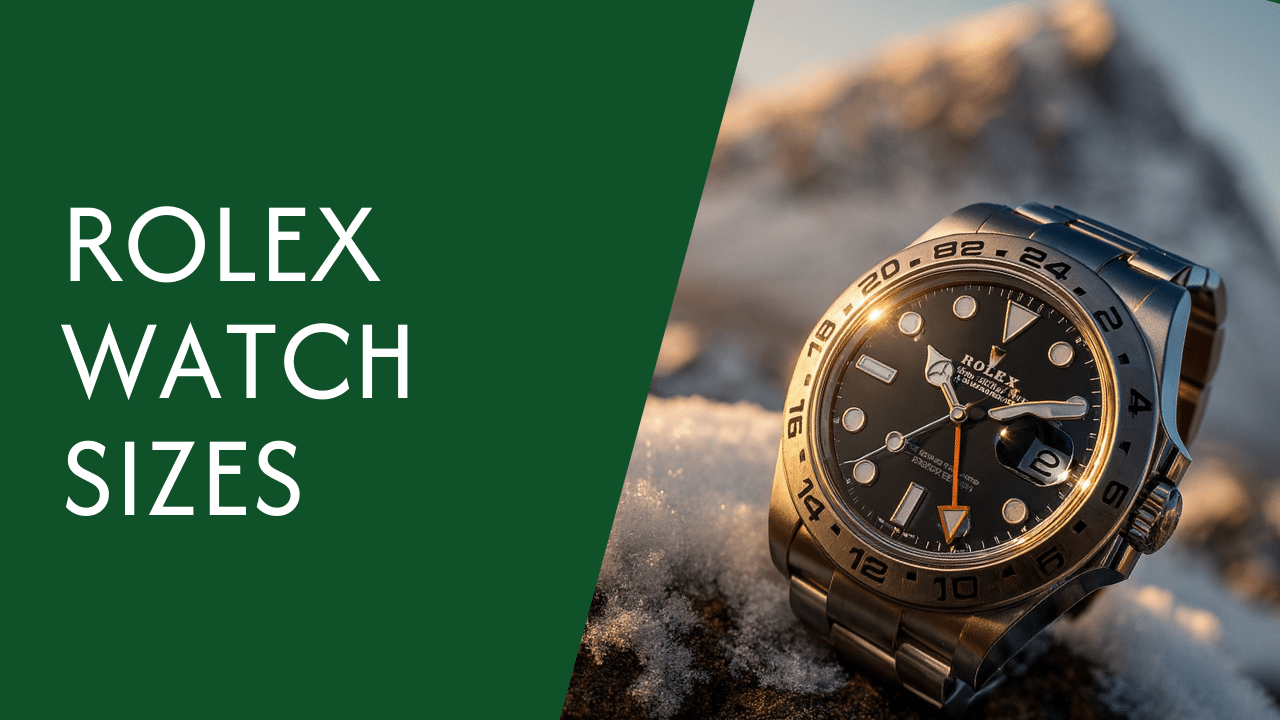
Choosing the right Rolex watch size is one of the most important steps when buying a luxury timepiece. Rolex offers a wide range of sizes across different collections, from elegant dress watches to robust sports models. Understanding Rolex watch sizes helps ensure your watch fits comfortably, looks balanced on your wrist, and matches your personal style. With options ranging from 28mm to 44mm, even a small difference in case diameter or dial size can change how a watch feels and appears. In this guide, we break down Rolex sizes, dial proportions, weight differences, and wrist-fit recommendations to help you choose with confidence.
Why Rolex Watch Sizes Matter
Rolex watches are designed with specific proportions, ergonomics, and visual balance, meaning size directly affects how a model wears on your wrist. Case diameter determines overall presence, while thickness, lug-to-lug distance, and bracelet width influence comfort and movement. A watch that’s too large may feel bulky or overpowering, while a watch that’s too small can look outdated or disproportionate. Understanding these size differences is especially important when exploring iconic models like the Submariner, Datejust, or Oyster Perpetual, where even a 1mm change can be noticeable. By learning how Rolex sizes work, you’ll be able to choose a watch that suits your wrist shape, daily lifestyle, and long-term comfort.
Key Rolex Watch Sizes Explained
Rolex watch sizing varies across collections, with each model offering unique proportions, dial layouts, and bracelet designs. Understanding these measurements helps you identify which models best complement your wrist size and personal style.
1. Rolex Case Diameter Sizes
The case diameter is the most commonly referenced measurement when discussing Rolex sizes in mm. Rolex typically measures the case from the 2 o’clock to the 8 o’clock position, excluding the crown. Popular diameters include 28mm, 31mm, 34mm, 36mm, 37mm, 40mm, 41mm, 42mm, and 44mm. Sports models like the Submariner and GMT-Master II mostly fall between 40mm and 41mm, while dressier pieces like the Datejust and Day-Date offer more sizing flexibility. Your wrist circumference plays a major role in determining the ideal size, and even a 1mm difference can change how the watch appears.
2. Rolex Dial Sizes & Face Sizes
A watch’s dial size, often referred to as Rolex face sizes, is influenced by bezel width, case shape, and hour-marker spacing. For example, a 36mm Datejust appears visually larger than a 36mm Explorer because the Explorer has a slimmer bezel. Rolex dials are designed with balanced proportions, so differences in face size affect the watch’s elegance and readability. A larger dial generally feels more modern and bold, while a smaller dial looks refined and classic. When comparing models with identical case diameters, always evaluate how the bezel affects the visible dial area.
Rolex Size Chart by Collection
Each Rolex collection offers specific case sizes that define its aesthetic.
- Oyster Perpetual: Available in 28mm, 31mm, 34mm, 36mm, and 41mm
- Datejust: Offered in 28mm, 31mm, 36mm, 41mm
- Day-Date: Available in 36mm and 40mm
- Submariner: 40mm and 41mm
- GMT-Master II: 40mm
- Explorer: 36mm and 40mm
- Daytona: 40mm
This Rolex size chart helps you quickly compare the standard size options across Rolex’s top models and find the right fit for your wrist.
Rolex Sizes for Men vs Women
Traditionally, smaller case sizes like 28mm–34mm were considered women’s sizes, while 36mm–41mm were seen as men’s. However, modern trends show both men and women choosing a wider variety of sizes. Many women now prefer 36mm Datejusts or even 40mm sport models for a contemporary oversized look. Conversely, some men with smaller wrists prefer the classic 36mm size for comfort and proportion. Rolex’s range ensures that every wearer, regardless of wrist size or style preference, can find a perfectly balanced watch within its collections.
Rolex Watch Weight Guide
Weight is another important factor when choosing a Rolex. Steel models such as the Submariner or GMT-Master II offer a robust but balanced feel. Precious metal versions, gold, platinum, or two-tone, are significantly heavier. Larger models like the Deepsea or Yacht-Master II also carry extra weight due to thicker cases and extended depth-rating components. A Rolex watch weight chart varies based on size, bracelet type, and material, so trying on different models is essential. If you prefer a lighter feel, consider titanium or steel models with slimmer profiles.
How to Measure Your Wrist for the Right Rolex Size
To find the ideal Rolex size, measure your wrist circumference with a tape measure. A wrist around 6 inches typically suits 34mm–36mm watches, while a 6.5–7 inch wrist works well with 36mm–40mm models. Larger wrists above 7 inches often pair best with 40mm–42mm watches. Beyond diameter, consider lug-to-lug measurement, which determines how far the watch extends across your wrist. Trying on similar-sized watches can also help determine which Rolex models feel the most natural and proportional.
Common Sizing Mistakes Buyers Make
Many Rolex buyers focus only on case diameter, overlooking other essential sizing factors. Avoiding these common mistakes ensures your watch fits comfortably and appears visually balanced on your wrist.
1. Choosing by Trend Instead of Fit
Some buyers choose oversized or undersized models simply because they are fashionable. While trends change, comfort and proportion remain constant. A watch should complement your natural wrist shape, not overwhelm it. Choosing a size based on current trends rather than personal fit often leads to regret.
2. Ignoring Lug-to-Lug and Case Thickness
A 40mm watch with long lugs can be worn larger than a 41mm model with compact ones. Similarly, thicker watches, such as dive models, may feel bulkier despite having a moderate case diameter. Buyers who ignore lug-to-lug distance and thickness may end up with a watch that feels awkward or sits too tall on the wrist.
3. Not Considering Future Wear (Daily vs Dress)
Some Rolex models are ideal for daily wear, while others are better suited for occasional use. A heavier or thicker model may feel impressive initially, but become uncomfortable during long-term daily wear. Thinking about how often and where you’ll wear the watch helps ensure the size suits your lifestyle.
What to Do If You're Unsure: Expert Rolex Sizing Advice
If you’re unsure which Rolex size is best, taking a few extra steps can help you make a confident choice and avoid a poorly fitting watch.
- Try on different Rolex sizes at an authorised retailer
- Compare sizes with watches you already own
- Consider your wrist measurement and comfort preferences
- Review official Rolex specifications for accurate dimensions
- Look at real wrist-shots from collectors online
- Check the weight and thickness of each model
- Ask professionals or experienced collectors for guidance
Rolex Size Quick Checklist
Use this quick checklist to evaluate the perfect Rolex size for your wrist and ensure the watch fits your lifestyle and comfort needs.
- Determine your ideal case diameter by measuring your wrist size and choosing a Rolex model that fits proportionally.
- Evaluate the dial and overall face proportions to ensure the watch offers the right visual balance for your wrist.
- Check the lug-to-lug length and bracelet taper, as these measurements affect how the watch sits on your wrist and wraps around it.
- Assess the watch's overall weight to ensure it feels comfortable for daily wear and long-term use.
- Compare sizes across different Rolex models, as each collection has unique proportions that can be worn differently on the wrist.
- Use a Rolex size chart to quickly reference available case diameters and identify the best options for your wrist size.
- Try on multiple Rolex sizes in person whenever possible to confirm which model provides the most natural and comfortable fit.
Conclusion
Choosing the right Rolex watch size is essential for comfort, aesthetics, and long-term enjoyment. By understanding case diameters, dial proportions, lug-to-lug distances, and weight differences, you can confidently select a model that suits your wrist perfectly. Whether you're drawn to the classic look of a 36mm Datejust or the bold presence of a 41mm sports model, the key is finding a size that feels natural and balanced. With the right knowledge and careful consideration, you can choose a Rolex that fits beautifully and enhances your personal style for years to come.