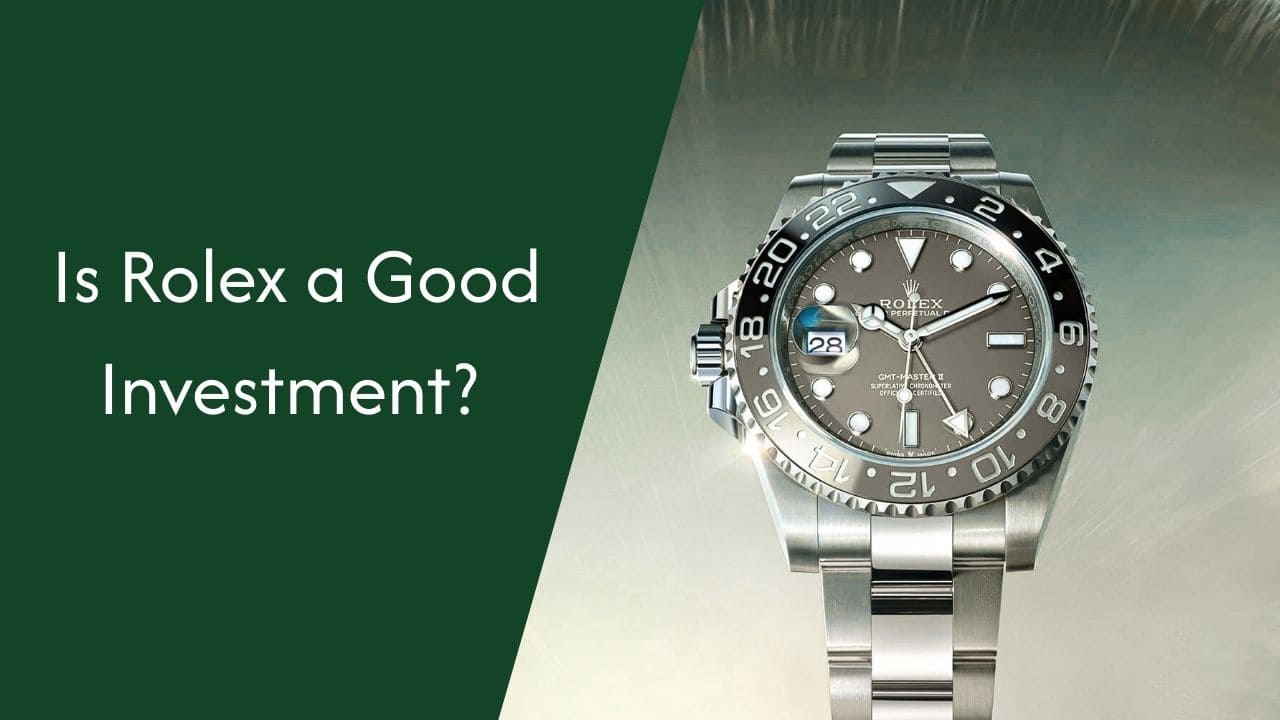
If you are considering buying a Rolex, there is a high chance that you have already asked yourself a simple question: Am I paying purely for the name, or will I get my money doubled? It is a fair concern, especially when prices reach five figures, and resale stories range from impressive gains to disappointing reality checks.
Luxury watches are no longer viewed only as personal stuff. Inflation, market uncertainty, and a growing preference for tangible assets have turned Rolex into a financial conversation. But, popularity does not automatically mean smart investing.
This article breaks down whether a Rolex can genuinely make financial sense, what conditions influence long term value, and where expectations often go wrong.
Key takeaways
- A Rolex is not an investment automatically, only a certain models, references, and watch conditions lead to a higher value.
- Models like Daytona, Submariner, and GMT Master are considered as top end model and have higher secondary market demands.
- Price growth is slow and steady, unless the watch once belonged to a famous celebrity.
- Vintage Rolex watches deliver exceptional results, but often come with a higher risk around authenticity and originality.
What Makes Rolex an Investment-Grade Watch?
Yes, certain Rolex watches are investment-grade.
Even if you are not a watch connoisseur, you still would have heard of the name ‘Rolex’, that’s how much this brand has made its impact in the market. Very few brands meet the standard consistency, hence Rolex is often discussed differently from most manufacturers.
The reasons why certain Rolexes are considered investment-grade are:
- Consistent global demand - Models such as the Submariner and Daytona attract buyers across regions and economic conditions. Interest does not rely on short-term trends or a narrow collector base, which supports stable resale demand.
- Strong liquidity in the secondary market - Rolex watches are actively traded worldwide. This makes it easier to sell without heavy discounts, especially compared to lesser-known luxury brands.
- Controlled production and distribution - Rolex limits production and manages authorised dealer allocations carefully. Popular references are not produced in excess to satisfy sudden demand. They do this deliberately to create genuine scarcity rather than artificial hype.
- Brand trust built over decades - A long history of precision, reliability, and recognisable design gives buyers confidence. This plays a role in resale value.
However, value on paper and value in practice are not the same thing. The retail price is simply the starting point. The secondary market price reflects what buyers are actually willing to pay at a given moment. Realised profit comes only after accounting for selling fees, servicing costs, insurance, and applicable taxes.
It is also important to be realistic. Not every Rolex increases in value. Many references remain close to retail for years, and some lose value once worn. Investment-grade performance tends to be limited to specific models with proven demand, limited availability, and a consistent resale history.
Historical Performance of Rolex Watches
Certain Rolex segments have delivered substantial appreciation, with resale prices rising between 200% and 500%, depending on the model and buying period in the last 10-15 years.
This performance and growth weren’t sudden. Price increases were gradual for many years, followed by sharp acceleration around 2020 and 2021, and then a visible correction as markets cooled. Even after those pullbacks, long-term holders remained well ahead compared to their original purchase prices.
Another reason Rolex attracts attention is volatility. When compared to equities, Rolex watches tend to move more slowly. Stock markets react instantly to economic news and interest rates, whereas watch prices usually adjust over longer periods.
This lower volatility does not mean higher returns every year, but it does mean price swings are often less aggressive, which appeals to buyers looking for stability alongside growth. This has helped Rolex function as a diversification asset rather than a direct replacement for stocks.
But the performance is not uniform. Returns vary heavily based on:
- The specific model and reference
- The price paid at entry
- Market conditions at the time of sale
Watches bought at peak prices often dropped in value, while those held over longer periods performed better. This is why when you buy and which model you choose matters as much as the brand.
Best Rolex Models for Investment Performance
1. Rolex Daytona
The Daytona is widely considered Rolex’s strongest performing investment model due to a combination of scarcity, heritage, and consistent buyer demand.
- Limited availability - Rolex produces the Daytona in smaller numbers compared to many other sports models. Dealer allocations remain tight, which keeps waiting lists long and supply restricted, leading to high demand.
- Motorsport heritage - Designed for professional racing drivers, the Daytona has a clear functional origin tied to motorsport. This history adds long term credibility rather than trend-based appeal.
- Proven long term appreciation - Several Daytona references have historically tripled in value over a 10 year holding period, particularly stainless steel models with desirable dial variations.
- High liquidity - The Daytona remains easy to sell even during market slowdowns. Demand from collectors and private buyers continues across global markets, reducing resale friction.
At the end of collectability, the Paul Newman Daytona shows how far demand can go. One historically significant example achieved a sale price of 17 million dollars, setting a benchmark for vintage Rolex collectables and reinforcing the Daytona’s status at the top of the market.
Every Daytona does not deliver the same result, but as a category, it remains one of the most resilient and consistently sought-after models produced by Rolex.
2. Rolex Submariner
The Submariner works as an investment because it is familiar to almost everyone, and not just watch collectors. It has been in demand for decades, and that demand exists across regions rather than within a small enthusiast circle. When a watch appeals to such a wide audience, resale value increases.
Stainless steel Submariners tend to hold their value better than precious metal versions. Steel models sit at a more accessible price point and attract buyers every day. Gold and two-tone versions often appeal to a narrower audience, which slows down the resale even if the retail price is higher.
There are also rare cases that show how high the Submariner value can go. There was a man who bought a submariner for just 100 Canadian dollars in the 1950s, wore it daily while working in the Arctic, and traveled extensively. Decades later, it was passed down to his son, and it sold for over one million dollars, setting a record for the model. The story shows how originality, history, and long-term ownership can transform a functional watch into something far more valuable.
Most Submariners will never reach that level, but the model’s consistency, recognition, and resale strength explain why it is one of the safest and most widely traded options in the Rolex lineup.
3. Rolex GMT-Master II
The GMT Master II stands out because small design changes have a big impact on value. Limited bezel colours, short production runs, and discontinued references often create clear price gaps between versions that may look similar at first.
When a specific bezel is no longer produced, demand tends to start quickly, especially among buyers who want something that is no longer easily available. Sometimes it’s just the fear of missing out.
Another reason the GMT Master II performs well is its audience. Collectors value the model for its aviation roots and evolving design history, while first-time investors are drawn to its recognisable look and strong resale market. This mix keeps demand active across different buyer profiles rather than relying on one narrow group.
One example shows how rare references can get high prices. A Rolex GMT Master reference 6542 from around 1958, which belonged to Pan Am pilot Captain Warren, was sold for 221,348 dollars. The value came from the watch being an early GMT Master, its original condition, and its clear ownership history.
4. Vintage Rolex Models
It is well established by now that ‘scarcity’ is one of the main factors influencing Rolex sales. So imagine the value for watches that stopped producing decades ago. It’s collectors dream and investors too.
The supply keeps decreasing every year, some get sold, some get damaged, some get discontinued, and no new watch is being made. Collectors pay more for watches that are untouched. Original dials, cases, and parts matter. Even small changes can lower the value. Two watches that look similar can sell for very different prices depending on what has been replaced or altered.
Vintage does come with more risks. Condition is not always easy to judge. Parts are often swapped over the years, and spotting incorrect details takes experience. Authentication is harder than with modern watches.
Buying vintage Rolex works best when you take your time and deal with someone who knows the watch inside out. At Time Is Money, vintage Rolex valuations are carried out with close attention to originality, condition, and market demand. This helps owners understand what their watch is truly worth, rather than relying on online listings or assumptions.
Factors That Influence Rolex Investment Returns
Rolex values change for simple reasons. What you buy matters. How well it is kept matters. Timing matters.
Two people can own Rolex watches for the same length of time and still get very different results.
The main factors that affect returns are:
- Model and reference number - Some models and references are wanted more than others. Small differences in year, material, or dial can change demand. Certain references stay popular for years, while others don’t.
- Condition, box, and paper - Watches in good condition are easier to sell. Original box and papers often help, especially with older or collectable models. A clear service history gives buyers confidence. Missing items or heavy wear usually lower the value.
- Retail price increases - Rolex raises retail prices regularly. When this happens, prices in the secondary market often move up as well, especially for models that are hard to buy new.
- Market cycle - Prices rise and fall over time. Strong demand leads to higher prices, followed by pullbacks when interest slows. Buying during these peak periods can lead to short-term losses, while holding through longer cycles often produces steadier results.
Risks and Downsides of Investing in Rolex
Buying a Rolex does not mean the price will always go up. The market changes, and watches are affected by it like anything else.
- Prices can drop. After the last surge in demand, some models fell by almost 30 percent from their highest prices. Anyone who bought near the top had to wait or accept a loss.
- Selling takes time. If you think a Rolex can be sold instantly like shares or funds, then you are wrong. You need a buyer, and if you want to sell quickly, the price usually comes down.
- There is a real risk of buying the wrong watch. Counterfeits exist, and genuine watches can still have incorrect or replaced parts. This is more common in private deals or through unknown sellers. Buy through trusted sites like Time Is Money only.
- Owning a watch costs money. Servicing is not cheap, insurance is often needed, and safe storage matters. Money tied up in a watch is also money you cannot use elsewhere.
Is Rolex a Good Investment for Long-Term Investors?
Rolex works better for people who plan to hold rather than trade. Buying and selling quickly rarely produces good results, as prices move slowly and selling costs can cancel out gains. Most strong outcomes come from owning the right watch over many years.
Long-term ownership usually means accepting a few things:
- Prices take time to improve. Watches that performed well often did so over a long period, not in a short window.
- Money is tied up. A watch cannot be turned into cash quickly without affecting the price.
- When you buy matters. Paying peak prices limits short-term results, while patient buying gives more room over time.
This approach suits collectors who want more than a return. Many buyers enjoy wearing the watch, maintaining it, and keeping it long-term. Any increase in value becomes a bonus rather than the only goal.
Conclusion
A Rolex can work as an investment, but only when it is treated for what it is. It is not a shortcut to quick profit, and it is not a substitute for traditional assets. When expectations are realistic, it can sit comfortably as an alternative way to store value.
Outcomes depend far more on decisions than on the logo. Choosing the right model, buying at a sensible price, and holding through full market cycles matter more than timing headlines or chasing hype. Where and how you buy also plays a role, as trusted sourcing reduces expensive mistakes.
Rolex fits best when it is part of a wider picture. It works alongside other assets, not in place of them. For those who value ownership as much as potential return, it offers something few investments can. You get to wear it, live with it, and still keep one eye on long-term value.
FAQs
Is Rolex a better investment than gold?
Rolex and gold behave very differently. Gold is highly liquid and reacts quickly to economic events. Rolex moves more slowly and depends on model demand and condition. Some Rolex watches have outperformed gold over specific long periods, but results are not consistent across all models. A Rolex also comes with storage, insurance, and servicing costs. It works better as an alternative asset rather than a direct replacement for gold, especially if you value ownership alongside potential returns from Rolex.
How long should you hold a Rolex to make a profit?
Rolex investing generally favors longer holding periods. Most meaningful gains appear over ten years or more rather than in the short term. Selling too early often results in fees and market swings reducing returns. Holding through full market cycles gives prices time to recover after corrections. Short-term trading is risky and usually benefits dealers more than private buyers.
Is it risky to invest in Rolex watches?
Yes, there are risks. Prices can fall, sometimes sharply, during market corrections. Liquidity is limited compared to financial assets, meaning selling quickly can reduce value. There are also risks around authenticity, incorrect parts, and condition, especially in private transactions. Ongoing costs such as servicing and insurance affect real returns. Rolex can reduce risk when bought carefully, but it does not eliminate it.
Can you wear a Rolex and still treat it as an investment?
Yes, but wearing it will affect the price. Light wear usually does not matter much, but Heavy wear does. Scratches, dents, and polishing lower what buyers will pay. Missing a box or papers also makes a difference. If you wear the watch, accept that it may be worth a little less later. Many people are fine with that because they bought it to use, not just store it.