.jpg)
Rolex Datejust Alternative: 9 Luxury & Affordable Watches That Deliver Similar Prestige
Today, a 41mm steel model sits above £8000 at retail, and market prices often stretch further. Availability adds another layer to the decision.
So if you want that same sense of ease on the wrist and long-term credibility, where else should you look? This guide lists serious luxury Rolex Datejust alternatives, strong mid-range Swiss options, and more accessible watches that deliver a similar presence without feeling like substitutes.
What Makes the Rolex Datejust So Iconic?

(Datejust 41mm - Oyster, 41 mm, Oystersteel and yellow gold)
Before you compare alternatives, you need to understand what the Datejust actually gets right. Its appeal is not built on one feature. It comes from a combination of design discipline and mechanical consistency that has remained stable for decades.
Design framework
- Round Oyster case available from 28mm to 41mm
- Date window at 3 with Cyclops magnifier
- Fluted or smooth bezel options
- Oyster or Jubilee bracelet
- Clear balance between formal and everyday wear
None of these elements feels excessive on its own. Together, they create a watch that works in most settings without adjustment. The proportions are controlled. The dial remains legible. The bracelet choices allow you to shift character without changing the watch itself.
Technical baseline
- Modern calibres 3235 or 3236
- 70-hour power reserve
- Chronometer accuracy rated to plus or minus two seconds per day
The specifications are not there for marketing value. They translate directly into ownership experience. You can leave it on the wrist for a full weekend and return to it still running. You can wear it daily without constant time correction.
Then there is market confidence. Steel models, especially in widely favoured configurations, tend to trade strongly. That long record of demand shapes buyer behaviour as much as design does. Many buy a Rolex as an investment because its price appreciates with time.
Why Look for a Rolex Datejust Alternative?
Not everyone who considers a Datejust ends up buying one. And it is not always about affordability. Often, it comes down to choice.
The first friction point is cost. A steel Datejust now sits comfortably above eight thousand pounds at retail. Add a fluted bezel or Rolesor configuration, and you move into five-figure territory without much effort. On the secondary market, sought-after combinations can stretch further. With that amount, you naturally start asking what else exists in the same financial bracket.
Between £4,000–£6,500, several Swiss brands offer watches with comparable case finishing, strong in-house or well-proven movements, and equally versatile sizing. You are not stepping into entry-level territory. You are simply redirecting your budget.
Access is another factor. Authorised dealer supply does not always align with demand. Certain dial colours or bezel configurations can be difficult to secure without an extended wait. For some buyers, the delay becomes part of the decision. Others would rather walk out with a watch on the wrist the same week.
Then there is personal preference. The Datejust formula is refined and restrained. That is precisely why some collectors look elsewhere. You might prefer a more technical aesthetic, a stronger sporting edge, higher anti-magnetic resistance, or a dial texture that feels less familiar.
Alternatives often explore these areas while keeping the same everyday versatility.
9 Best Rolex Datejust Alternatives in 2026
Tier 1: Direct Luxury Competitors (£4,500–£8,000)
1. Omega Seamaster Aqua Terra

The Aqua Terra approaches the same everyday brief from a slightly different angle. Where the Datejust leans traditional, this model feels more contemporary without losing restraint.
Price Range: £4,500–£6,500
Power Reserve: 55 hours
Why it qualifies:
• 38mm and 41mm case options that mirror the most popular Datejust sizes
• Date positioned at 6
• Clean integrated steel bracelet with solid construction
• Master Chronometer certification with strong anti-magnetic resistance
• Established secondary market demand in the UK
The horizontal teak pattern dial adds texture without overwhelming the design. It gives the watch personality while keeping it versatile enough for formal wear.
Under the caseback, Omega’s Master Chronometer movements are tested beyond standard chronometer requirements, including magnetic resistance levels that exceed what most owners will ever encounter in daily life. That technical buffer adds practical reassurance.
For buyers who prioritise engineering depth and immediate availability over brand dominance, the Aqua Terra presents a rational and credible alternative within the same luxury bracket.
2. Grand Seiko SBGH277

From the Grand Seiko Heritage Collection
Price range: £5,500 to £6,500
Power reserve: 72 hours
Grand Seiko does not try to mirror Rolex branding. It competes on execution.
Why it qualifies
- 37mm to 40mm case sizing across the Heritage line
- Date at three with clean dial symmetry
- Zaratsu polishing with sharp case edges
- High beat automatic movement
- 72-hour power reserve
The case proportions sit close to traditional Datejust dimensions, so the watch feels familiar on the wrist without copying the design. The dial remains simple, but the surface finishing gives it depth. Under light, the polished areas reflect cleanly without distortion. The transitions between brushed and polished surfaces are precise, not rounded off.
The high-beat movement runs at a faster frequency than standard automatics. In daily wear, that translates to stable timekeeping and a smoother seconds hand motion. It is a mechanical choice, not a marketing one.
3. Tudor Royal

Price range: £2,000 to £3,200
Power reserve: 38 hours
If you want something structurally closest to a Datejust without paying Datejust money, the Tudor Royal deserves a serious look.
Why it qualifies
- Notched bezel that echoes the visual effect of a fluted design
- 38mm and 41mm case options
- Date window at 3
- Steel and steel with gold configurations
- Brand historically linked to Rolex
The case proportions sit squarely in classic dress sport territory. The bezel gives the watch texture and presence without copying Rolex outright. On the wrist, it reads familiar, especially in two-tone variants, but it carries its own dial patterns and integrated bracelet structure.
The bracelet design is worth noting. Unlike the Oyster or Jubilee, it integrates directly into the case, giving the Royal a more contemporary profile. That detail shifts the character slightly while keeping the overall architecture aligned with the Datejust template.
Inside, Tudor uses reliable automatic movements based on proven Swiss calibres. The 38-hour reserve is modest compared to modern Rolex movements, but in everyday use, it remains practical and straightforward to service.
Tudor was created as Rolex’s sister brand, positioned to offer strong build quality at a lower price point. That relationship still influences buyer perception. When someone wants the Datejust look but not the Datejust price, or wait, the Royal often becomes the logical bridge.
Tier 2: Strong Swiss Alternatives (£2,000–£4,500)
4. Longines Conquest Classic

Price range: £900 to £2,000
Power reserve: 72 to 80 hours, depending on calibre
Longines does not try to compete with Rolex on status. It competes on accessibility and heritage.
The Conquest Classic follows a familiar dress sport template. The case generally sits around 29.5mm and 34mm, a comfortable middle ground for most wrists. The dial remains clean, with a date window at three and applied hour markers that keep the layout balanced.
Why it qualifies
- 29.5 and 34mm sizing that mirrors modern, versatile proportions
- Clear date display at three
- Automatic movement with extended power reserve
- Subtle fluted-inspired bezel styling on select references
- Established Swiss brand history
The 72 to 80 hour reserve, depending on movement version, exceeds what many buyers expect at this price point. That longer reserve adds practical flexibility if you rotate watches during the week.
In steel bracelet configurations, the watch carries a restrained presence. It works in professional settings without feeling overstated. The fluted style bezel variants introduce a visual link to the Datejust aesthetic, though the execution remains distinctly Longines.
This model often serves as an entry point into Swiss automatic watches. It delivers the core elements that draw people to the Datejust category, proportion, date symmetry, and everyday wearability, without entering the higher pricing tiers.
5. Longines Master Collection

Price range: £1,800 to £3,500
Power reserve: generally 64 to 72 hours
If the Conquest leans slightly sporty, the Master Collection moves closer to traditional watchmaking.
This line focuses on classical dial architecture. You will see applied numerals, textured surfaces, sector style layouts, and, in some references, complications such as moonphase or complete calendar displays. The design language is more formal, yet many steel bracelet variants keep it wearable beyond strictly dress occasions.
Why it qualifies
- Balanced case sizes, often 34mm to 40mm
- Clean date placement on simpler references
- Automatic movements with extended power reserve
- Steel bracelet and leather strap options
- Established Swiss manufacturing history
The movement inside most time and date models is based on Longines’ L888 calibre, offering around 72 hours of reserve. That gives you modern autonomy without daily winding concerns.
Where this differs from the Datejust formula is in tone. The Master Collection feels more classical and less sport-driven. There is less emphasis on bracelet presence and more attention on dial detail. For some buyers, that shift is exactly the appeal.
6. Rado HyperChrome Classic

Price range: £1,200 to £3,000
Power reserve: approximately 80 hours
Rado approaches this category through material science rather than tradition.
The HyperChrome Classic keeps the familiar structure. Round case. Date at three. Steel bracelet options. What changes is the surface treatment. Instead of fluted steel catching the light, you often get polished high-tech ceramic elements that feel smoother and more resistant to daily wear.
Why it qualifies
- Date window positioned at three
- Ceramic bezel or ceramic case components
- Automatic movement with around 80 hour reserve
- Clean dial layouts with restrained detailing
- Strong reputation for scratch-resistant materials
The ceramic bezel is the defining detail. It does not replicate a fluted design. It replaces it with a glossy, modern finish that resists scratches better than traditional steel. Over time, that matters if you actually wear the watch rather than store it.
The automatic movement delivers an 80-hour reserve, which exceeds older-generation dress watches in this price band. That gives you flexibility if you rotate pieces during the week.
The HyperChrome Classic does not compete on heritage in the same way as Rolex or Longines. It competes on durability and contemporary design.
Tier 3: Accessible Mechanical Datejust-Style Watches (£250–£1,000)
7. Tissot Gentleman Powermatic 80

Price range: £700 to £900
Power reserve: 80 hours
The Gentleman is often overlooked because it sits quietly in the catalogue. That restraint works in its favour.
At 40mm, the case lands close to modern Datejust sizing without feeling oversized. The dial remains clean. Baton markers, a date at three, and restrained branding keep the layout symmetrical and easy to read.
Why it qualifies
- 40mm case with balanced proportions
- Date window at 3
- Powermatic 80 automatic movement
- 80-hour power reserve
- Steel bracelet with traditional three-link construction
The Powermatic 80 movement offers an extended reserve well past older entry-level automatics. You can set it down for several days and return without resetting the time. In practical ownership, that makes rotation easier.
Compared with the PRX, the Gentleman follows a more traditional case and bracelet structure rather than an integrated sports design. That makes it structurally closer to the Datejust template. It works in formal settings without drawing attention to itself.
Resale strength is not the reason to buy this watch. It serves as an entry point into Swiss automatic ownership with dependable performance and classic proportions.
8. Citizen Tsuyosa NJ0150

Price range: £250 to £350
Power reserve: 40 hours
The Tsuyosa keeps things simple. Steel case. Calendar at three. Automatic movement. No attempt to position itself as a luxury.
At 40mm, the proportions feel current and wearable. The magnified date window gives it a familiar look for anyone drawn to the classic three o’clock layout. The bracelet connects cleanly into the case, creating a continuous profile without the sharper angles seen in sport-focused integrated designs.
Why it qualifies
- 40mm stainless steel case
- Date positioned at three with a magnifier
- Integrated style bracelet
- Citizen automatic calibre 8210
- Low entry cost
The 8210 movement offers around 40 hours of running time. It is straightforward, widely used, and easy to service. You are not paying for decoration or brand hierarchy. You are paying for functionality.
This watch makes sense if you want to test the format before committing to higher-tier Swiss pricing. It delivers the structure people associate with the Datejust category at a fraction of the cost.
9. Seiko Presage Style 60s
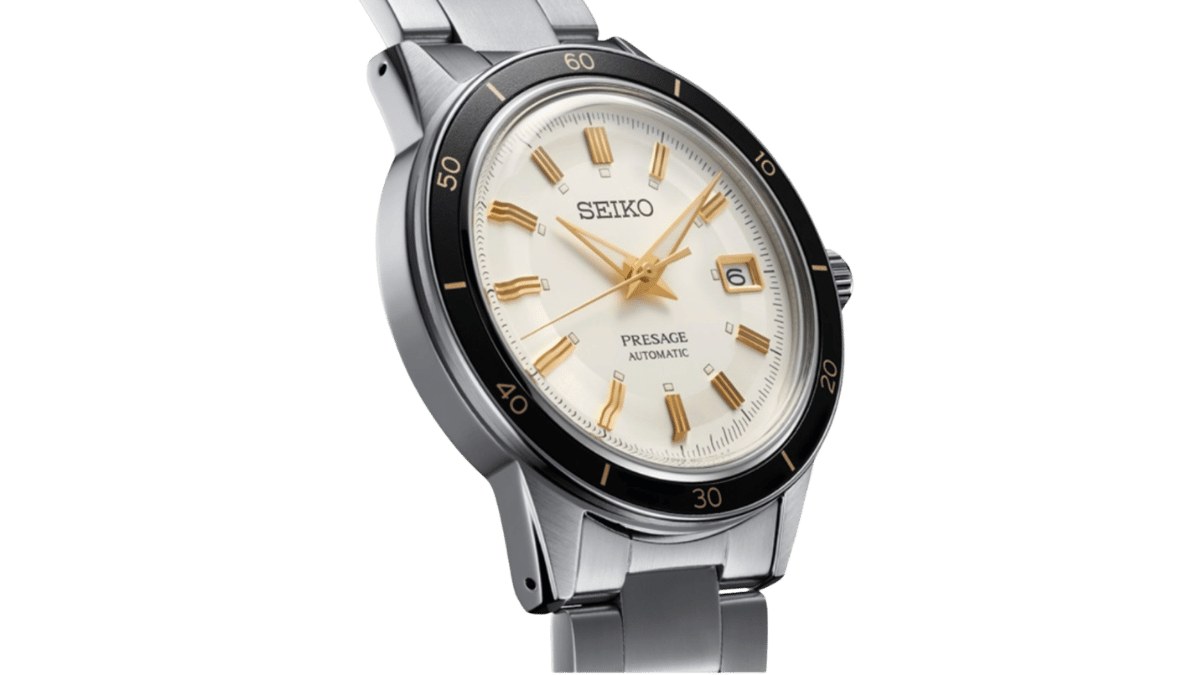
Price range: £450 to £650
Power reserve: 41 hours
The Style 60s line keeps the proportions controlled and the layout traditional. It does not attempt to mimic Swiss luxury cues. Instead, it focuses on solid mechanical performance and balanced design.
Case sizes typically sit around 40mm with relatively slim profiles, which keeps the watch wearable in both professional and casual settings. Bracelet configurations are available on several references, giving it a more structured presence compared to leather strap variants.
Why it qualifies
- Conservative case proportions around 40mm
- Date displayed at 3 on most references
- Stainless steel bracelet options
- Seiko automatic calibre 4R35
- Reliable everyday performance
The 4R35 movement offers roughly 41 hours of reserve. It is widely used across Seiko’s mechanical range and has built a reputation for durability rather than refinement. Accuracy tolerances are broader than Swiss chronometer standards, but for daily wear, it remains dependable.
This is not a prestige play. It is a practical mechanical watch with familiar symmetry and restrained sizing. If you want the core layout associated with the Datejust category without stretching into higher price brackets, the Presage Style 60s provides a sensible starting point.
How to Choose the Right Rolex Datejust Alternative?
Most people focus on the logo first. That is usually the wrong starting point.
If you strip the branding away, the decision comes down to proportion, mechanics, resale behaviour, and how the watch actually feels on your wrist. One strong spec will not compensate for a poor fit. One famous name will not fix daily inconvenience.
Use the table below as a filter before narrowing your shortlist:
When Does It Still Make Sense to Buy a Rolex Datejust?
After reviewing alternatives across different price tiers, one point remains clear. The Datejust occupies a position that is difficult to duplicate entirely.
You can match proportions. You can match finishing. In some cases, you can exceed movement specifications. What remains harder to replicate is brand equity combined with global liquidity. A Datejust is instantly recognised, widely traded, and consistently understood across markets. That level of demand supports resale confidence in a way few competitors can mirror.
For buyers in the UK who prefer not to navigate authorised dealer uncertainty, the pre-owned route often makes more sense. Condition, provenance, and verification become critical at that stage. Working with an established specialist reduces the guesswork and speeds up access to specific references.
Time Is Money Watches focuses on sourcing and supplying carefully selected Rolex models, including Datejust references, with a quicker turnaround than traditional retail channels typically allow. For clients who want the reassurance of viewing before committing, in-person appointments at the showroom provide the opportunity to compare configurations side by side rather than relying on stock images.
The Best Rolex Datejust Alternative Depends on Your Priority
There is no single “best” alternative. There is only the option that aligns with what you value most.
If recognition, liquidity, and long-term market strength sit at the top of your list, the Rolex Datejust remains difficult to displace. Its position is established and widely understood.
If you are drawn to movement engineering and technical standards, Omega makes a strong case. If surface finishing and dial execution matter more than brand visibility, Grand Seiko deserves serious consideration. If your focus is controlled spending while keeping the classic date at three formats, Longines and Tissot provide sensible entry points.
The decision is about intention. Are you buying for brand leverage, everyday reliability, or capital preservation?
For buyers in the UK weighing a Datejust against carefully selected alternatives, working with an experienced specialist such as Time Is Money Watches provides authentication, transparent pricing, and the flexibility to upgrade later through part exchange when your collection evolves.
FAQs
What is the closest watch to a Rolex Datejust?
If you are looking for the nearest equivalent in size, layout, and overall market position, the Omega Seamaster Aqua Terra usually sits at the top of the list. It offers similar case proportions, a clean date at three, and strong bracelet execution. It competes in the same luxury bracket, even if the design language leans slightly more modern than traditional Rolex styling.
Are Datejust alternatives a good investment?
Some alternatives hold value respectably, especially from brands such as Omega or Cartier. That said, Rolex continues to lead in long-term appreciation and global liquidity. If resale strength is your primary motivation, the Datejust still carries an advantage. If you are buying mainly for wear, several alternatives provide strong quality without the same price pressure.
Is Tudor a good Datejust alternative?
Yes, particularly models such as the Tudor Royal. Tudor shares corporate heritage with Rolex, and that connection influences case construction and overall durability. The finishing and movement specifications differ, but the structural layout feels familiar at a lower cost.
Should I buy new or pre-owned?
Pre-owned often offers better entry pricing and less immediate depreciation. The key is verification. Sourcing through an established specialist such as Time Is Money Watches reduces risk by ensuring authenticity, transparent condition reporting, and proper documentation.