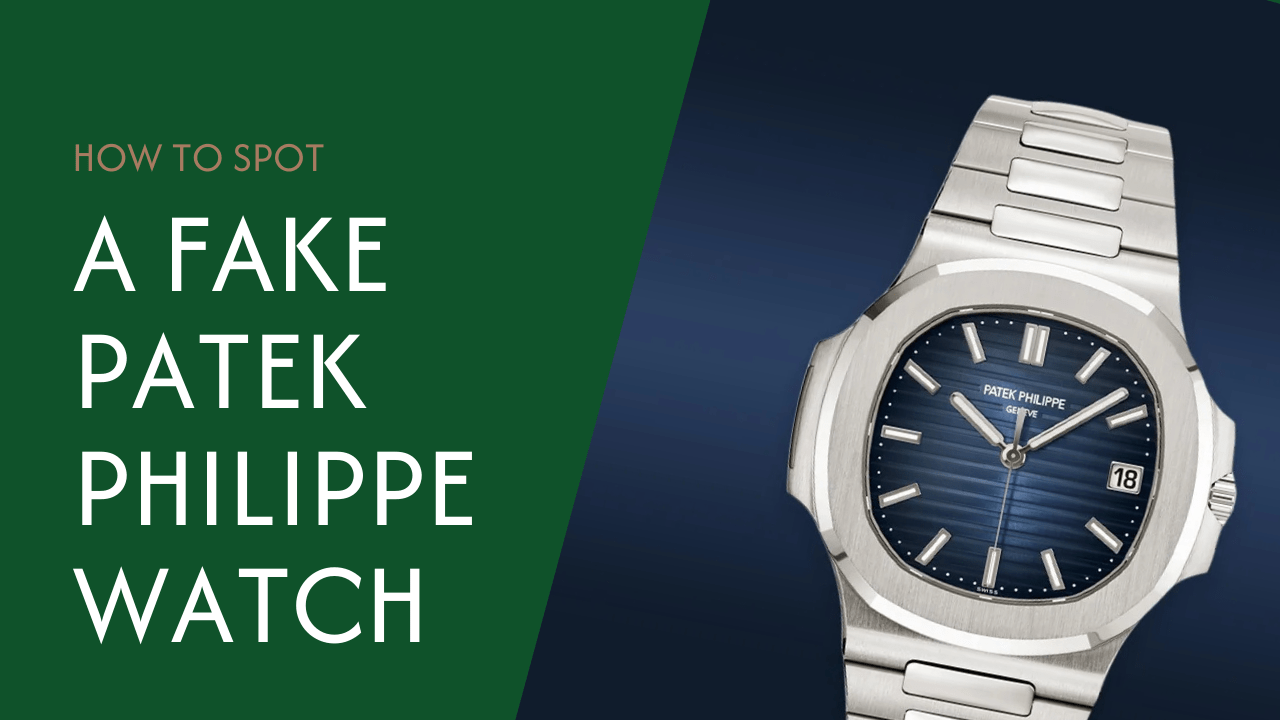
Patek Philippe is widely regarded as one of the finest and most prestigious watchmakers in the world, with models like the Nautilus, Aquanaut, and Calatrava setting industry benchmarks for craftsmanship and value. Because of this reputation, counterfeit Patek Philippe watches have become increasingly common, targeting both new buyers and collectors. Spotting a fake can be challenging, especially when replicas mimic the design and finish of genuine models. Understanding how to spot a fake Patek Philippe is essential before making any purchase, whether pre-owned or brand new. This guide walks you through the most reliable authenticity markers to help you make a secure investment.
Why Patek Philippe Watches Are Heavily Counterfeited
Patek Philippe watches represent the pinnacle of Swiss luxury watchmaking, known for their hand-finished movements, refined aesthetics, and strong long-term value. Their exclusivity, high market prices, and limited production runs make them highly sought after by collectors and equally attractive to counterfeiters. Popular models like the Nautilus 5711 and Aquanaut 5167 often sell far above retail, creating demand that counterfeit sellers try to exploit.
Fake Patek Philippe watches vary widely in quality. Some are basic replicas with obvious flaws, while others are “super clones” designed to copy the skeleton movement layout, dial texture, and bracelet finishing. However, even high-end fakes struggle to replicate the micro-finishing, movement architecture, serial number system, and overall craftsmanship of a genuine Patek. Understanding these inconsistencies is crucial to identifying red flags early and avoiding an expensive mistake.
Key Features to Check on a Patek Philippe Watch
Patek Philippe watches stand out for their exceptional finishing, precise engineering, and elegant design. Counterfeiters may capture the shape or style but fail to replicate the refined craftsmanship found in every authentic piece. Below are the most important features to inspect closely when evaluating a Patek Philippe watch.
1. Dial Quality & Printing Precision
Patek Philippe dials are known for flawless printing, perfect alignment, and consistent text thickness. Whether it’s the horizontal embossing of the Nautilus, the clean Arabic numerals of the Aquanaut, or the minimalistic layout of the Calatrava, every detail is precise. The brand logo should be sharp, deeply printed, and perfectly centred, with no smudging or fading. Counterfeit dials often show uneven printing, misaligned indices, incorrect fonts, or inconsistent spacing. Even subtle variations in the minute track or date window alignment can expose a fake. Always compare the dial layout with official Patek reference images to spot discrepancies.
2. Case Finishing & Material Quality
Patek cases exhibit a level of finishing that is extremely difficult for counterfeiters to duplicate. The Nautilus features a distinctive combination of brushed surfaces and polished bevels, executed with perfect symmetry. The Aquanaut’s rounded edges and smooth case contours are hand-finished. Fake watches often have uneven brushing, overly shiny polishing, sharp edges, or incorrect proportions. Patek Philippe uses high-grade stainless steel, white gold, rose gold, or platinum, creating a solid feel without unnecessary weight. Replicas commonly use lower-quality materials that feel light, hollow, or rough to the touch. Any inconsistency in texture, symmetry, or finishing should raise suspicion.
3. Movement Architecture & Finishing
One of the strongest indicators of authenticity is the movement. Genuine Patek Philippe watches, especially models with exhibition case backs, feature beautifully finished movements with Geneva stripes, anglage (hand-polished edges), and perfectly aligned bridges. Every screw, jewel, and gear is meticulously crafted. Fake movements may look similar at a glance but lack true depth, clean finishing, or correct component placement. Super clones often use cheap, decorated movements that mimic the look but not the performance. The rotor on real Patek automatics rotates smoothly and quietly, often in 21k gold. If the movement is noisy, simplified, or poorly finished, it’s likely fake.
4. Bracelet, Strap & Clasp Construction
The bracelet quality on models like the Nautilus is one of the biggest giveaways. Genuine Patek bracelets have smooth articulation, solid links, and perfectly brushed surfaces. The clasp closes with a clean, secure click and feels refined. Replicas often have rattling links, uneven brushing, or loose clasps. On the Aquanaut, the rubber strap is thick, high-quality, and seamlessly integrated into the case. Fake straps may feel plasticky, thin, or stiff. Clasp engravings should be sharp and correctly aligned. If the bracelet feels flimsy, sounds hollow, or shows poor finishing, the watch is likely not an authentic Patek Philippe.
5. Case Back Engravings & Hallmarks
Patek Philippe case backs feature precise engravings, including the brand name, reference number, precious-metal hallmarks, and the Geneva Seal on certain models. These engravings are deep, clean, and perfectly spaced. Counterfeits often feature shallow laser etching, incorrect fonts, or uneven spacing. On gold models, authentic hallmarks are crisp and placed in correct locations, whereas fakes may use generic or incorrect stamping. Exhibition case backs should reveal a well-aligned and beautifully decorated movement. If the engravings appear faint, inconsistent, or poorly executed, it’s a strong indicator that the watch is a replica rather than a genuine Patek Philippe.
6. Serial Numbers & Documentation
Every Patek Philippe watch has a unique serial number and movement number, matching the documents provided at purchase. These engravings are small but extremely clean and precise. Counterfeits often have random numbers, sloppy engraving, or mismatched paperwork. While older vintage models may not always come with full documentation, modern Patek watches typically include certificates of origin and service records. Compare the watch's serial number with official paperwork and verify that the reference number matches the correct model. If the documents appear generic, misspelled, or inconsistent, treat the watch with caution and seek professional verification.
Red Flags: Promises That Are Too Good to Be True
Even if a fake Patek Philippe looks convincing, certain warning signs can quickly expose it. These red flags often appear in pricing, seller behaviour, and missing documentation. Recognizing them early helps you avoid scams and ensures you only invest in a genuine Patek Philippe timepiece.
1. Unrealistic Pricing
Patek Philippe watches rarely sell for low prices, especially models like the Nautilus or Aquanaut that often trade far above retail. If a listing offers a massive discount or seems unusually affordable, it’s a clear warning sign. Counterfeiters rely on low pricing to tempt buyers into quick decisions. Always compare with reputable dealers and auction data. If the price seems too good to be true, it almost always indicates a fake—regardless of how convincing the photos appear.
2. Suspicious Seller Behaviour
Be cautious when sellers avoid answering questions, refuse to show the serial number, or provide low-quality images. Reputable sellers are transparent, knowledgeable, and willing to offer clear proof of authenticity. Evasive communication, pressure to complete the sale quickly, or refusal to meet in secure locations are strong red flags. Trustworthy sellers usually provide references, return policies, and detailed records. If the seller seems unprofessional or uncertain about the watch’s origin, it’s safer to walk away.
3. Missing or Fake Documentation
Modern Patek Philippe watches typically come with certificates, booklets, and presentation boxes. Counterfeiters often use fake or poorly printed documents, mismatched serial numbers, or generic packaging. While older models may lack complete paperwork, it’s still important to review whatever documentation is provided. Examine fonts, spelling, and reference numbers carefully. Missing or suspicious paperwork should prompt a deeper investigation before making a purchase.
What to Do If You’re Unsure: Verification & Expert Help
If doubts remain after your initial inspection, taking further authentication steps is essential. Patek Philippe watches are precision-engineered instruments, and experts can identify details that may not be visible to the untrained eye. These actions help confirm authenticity and protect your investment.
- Have the watch inspected by a certified Patek Philippe dealer or authorised service centre.
- Ask an experienced watchmaker to examine the movement and finishing.
- Verify serial and movement numbers using trusted authentication sources.
- Request high-resolution images when buying online.
- Compare the watch with official reference images for accuracy.
- Review documents carefully to ensure consistency across all details.
- Take your time, never rush when evaluating a high-value watch.
Quick Pre-Purchase Checklist
Before finalizing your purchase, use this checklist to ensure the Patek Philippe watch meets authenticity standards. These points highlight the most reliable indicators, helping you identify counterfeits quickly and make a confident buying decision.
- Inspect dial printing, logo alignment, and texture quality.
- Check the case finishing for correct brushing and polishing.
- Evaluate movement depth, architecture, and decoration.
- Examine the bracelet or strap's quality and the clasp's engravings.
- Verify engravings, hallmarks, and case back markings.
- Confirm that the serial and movement numbers match the documentation.
- Compare pricing with real market values to avoid unrealistic deals.
Conclusion
A genuine Patek Philippe watch represents exceptional craftsmanship, heritage, and long-term value. Because counterfeits are increasingly sophisticated, knowing what details to inspect is essential before making a purchase. By examining the dial, case, movement, engravings, and documentation, and being cautious of unrealistic prices or suspicious sellers, you can confidently distinguish real from fake. When in doubt, expert verification from an authorised service centre provides the most reliable confirmation. With patience and proper research, you can protect your investment and enjoy the pride of owning a truly authentic Patek Philippe timepiece.